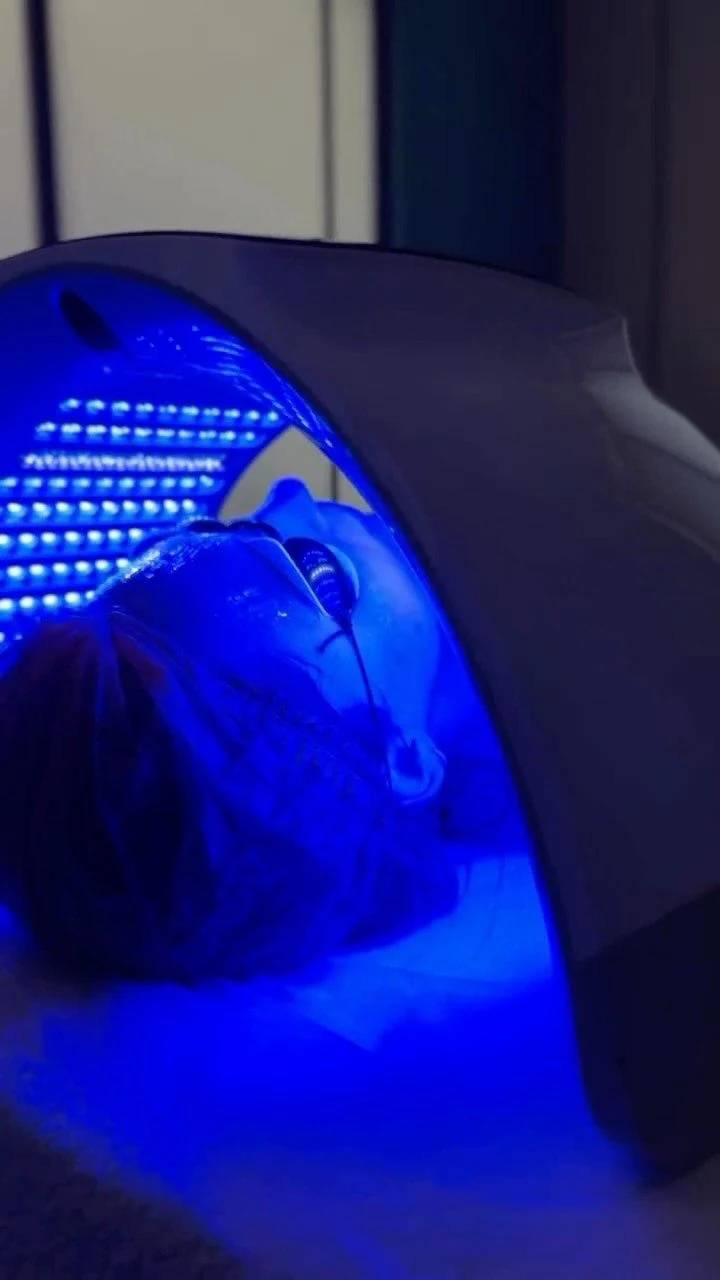
A closer look at light-based skincare
LED uses light-emitting diodes to deliver selected wavelengths to the skin. It is a non-invasive treatment often combined with other skin care. [1]
At Olena’s studio in Sunny Isles Beach, the standalone LED Light Therapy appointment is listed at 20 minutes and $50. A $30 facial add-on is also available to discuss. The aim is a calm, focused session that complements your skincare routine; the appropriate option depends on your skin and the rest of your visit.
The gallery shows red and blue light sessions. Those colors introduce the experience, but a photograph cannot confirm a device’s exact wavelength, dose or suitability for a particular concern. This article separates what clinical studies have measured from the service details you should confirm with Olena before booking.
Potential benefits, with the evidence in view
Blue–red LED for some acne concerns
A 2013 double-blind randomized trial assigned 35 people with mild-to-moderate acne to a blue–red home LED device or sham treatment. After a four-week course, acne lesions improved in the active group at the 12-week assessment. The small, device-specific study supports potential benefit, not guaranteed clearing from one studio session. [2]
Red and near-infrared LED for skin appearance
A 2007 randomized split-face trial tested red LED, near-infrared LED, alternating treatments and sham light. Active groups improved wrinkle and elasticity measurements after a four-week course. Only 76 of 112 participants completed the study, and the manufacturer supported it. Attrition and specific equipment limit how broadly these findings apply. [3]
A non-invasive option with little interruption
Ordinary LED treatment generally allows a return to routine activities. Possible reactions include redness, rash or discomfort, so “minimal downtime” does not mean everyone will react identically. Recovery instructions may also reflect other treatments received during the same visit. [1]
For your consultation, make the desired benefit concrete: fewer inflamed spots, a smoother-looking surface or a convenient addition to an existing facial. Ask which of these goals the proposed session is intended to address and how you will review the response. A clear purpose makes the treatment easier to evaluate.
What the benefits do not promise
The AAD describes visible blue and red light mainly for pimples, with limits for blocked pores, cysts and nodules. Photodynamic therapy adds a photosensitizing medicine; its results should not be attributed to LED alone. Discuss persistent, painful or scarring acne with a dermatologist before choosing a light-based plan. [4]
Promising trials do not settle every treatment question. In its 2024 acne guideline update, the AAD found insufficient evidence to make recommendations for light-based procedures. This supports a measured discussion of LED’s possible role alongside established care, rather than replacing a prescribed acne plan on your own. [6]
The trials above used repeated courses and measured changes over weeks. They do not show that one 20-minute visit erases wrinkles or clears every breakout. Before paying for a series, agree on a realistic goal, the proposed review date and the reason for each additional session. Results and their durability vary.
Before your visit: suitability and eye protection
Discuss light-sensitive conditions, medicines that increase light sensitivity and pigment concerns with a dermatologist. Follow the device’s specified eye protection; ordinary sunglasses do not replace required goggles. The AAD notes that long-term effects remain incompletely understood, so assessment and correct use matter even for a gentle-looking treatment. [5]
Bring a list of medicines and skin products, and mention recent procedures, current irritation, eye conditions or unusual reactions to light. Ask whether any medical advice is needed before your appointment. Do not stop prescribed medicines yourself; let the prescribing clinician advise on changes and timing.
Ask Olena which device and light setting are proposed, why they fit your goal and what protection will be provided. Confirm whether you are booking the standalone session or a facial add-on. The appointment length is a service detail, not a reason to copy the exposure schedule from a research paper or another device.
Aftercare that supports the bigger picture
Leave with clear aftercare instructions and a contact for questions. Tell the provider if a session feels uncomfortable, and seek medical advice for concerning or persistent symptoms. When reviewing progress, use photographs in similar lighting and discuss the original goal, comfort and whether the next step still makes sense for you.
Professional sources
These sources address LED skin treatment, its clinical evidence and light-specific precautions. Each is labeled by type; manufacturer information is not independent clinical evidence. They do not endorse the studio or test its specific service. Sources reviewed November 23, 2026.
- Professional guidanceCleveland ClinicLED treatment, recovery and possible reactions
- Clinical studyKwon et al. · British Journal of Dermatology · 2013Randomized blue–red LED trial for acne
- Clinical studyLee et al. · Journal of Photochemistry and Photobiology B · 2007Controlled study of red and near-infrared LED
- Professional guidanceAmerican Academy of DermatologyWhat light treatments can and cannot do for acne
- Professional guidanceAmerican Academy of DermatologyRed light: suitability and eye protection
- Professional guidanceAmerican Academy of Dermatology · 2024Acne guideline update and the limits of light-based evidence
Educational information; not an individual diagnosis or medical treatment plan.