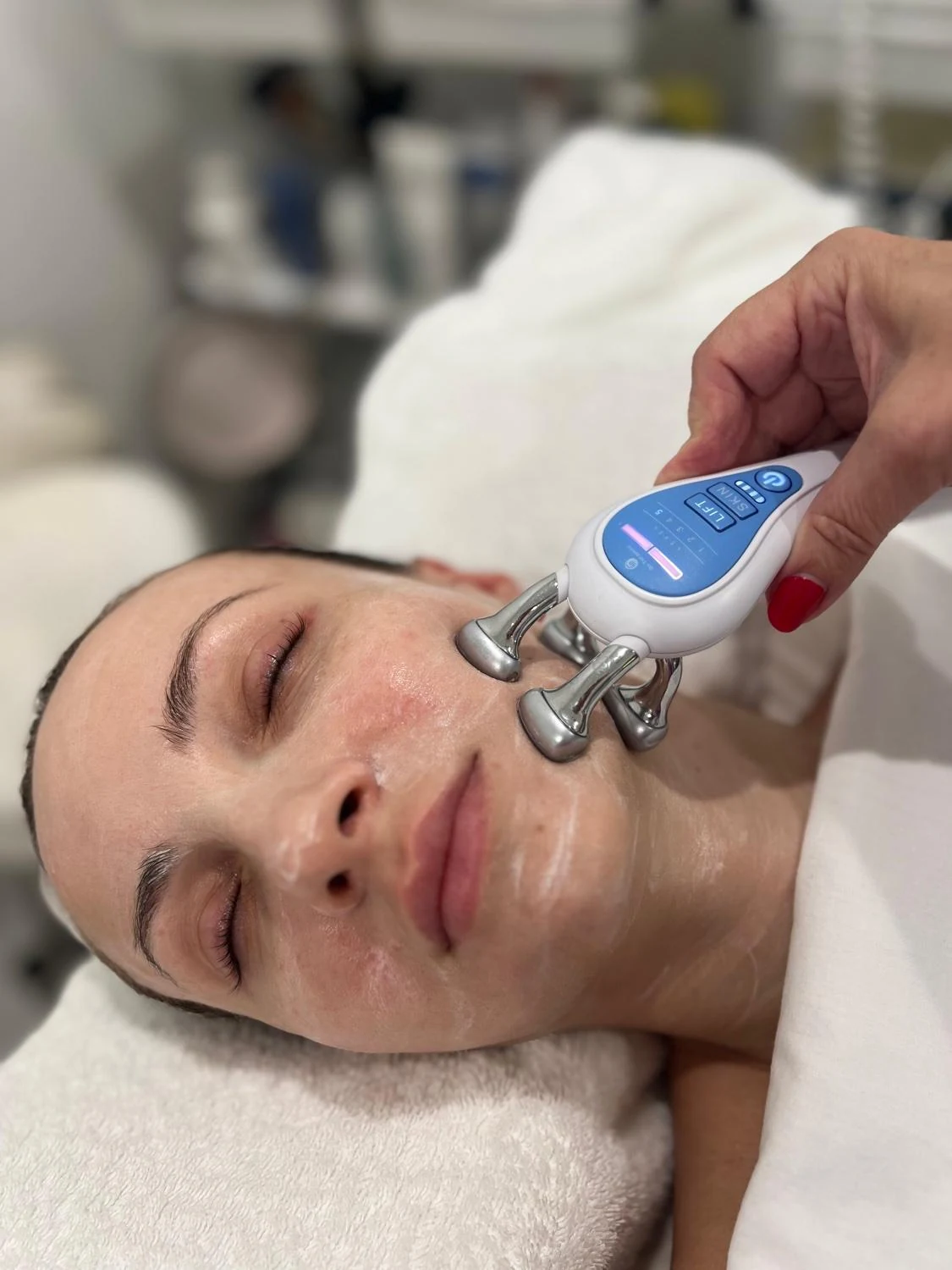
Understanding a microcurrent facial
Microcurrent uses very low electrical currents, measured in microamperes, through electrodes contacting the skin. It differs from stronger electrical muscle stimulation. An FDA filing for one facial device describes this distinction; it does not verify the equipment or results of every studio treatment. [1]
At Olena’s Sunny Isles Beach studio, Microcurrent Facial is listed at 30 minutes and $120 per session, with a cosmetic goal of a more lifted-looking contour. The treatment page includes two videos and a client photograph. Ask about the actual device, its stimulation mode and the products included before choosing your appointment.
Possible benefits, with realistic expectations
A possible improvement in fine-line appearance
A two-week manufacturer study included 22 women using microcurrent on one facial side, with cosmetics alone on the other. Eye-wrinkle and ultrasound skin-density measures improved. Fixed treatment sides, no sham device and short follow-up limit certainty. These findings do not establish lasting lifting or the result of one studio facial. [2]
Encouraging early research on wrinkles
An older uncontrolled study recruited 30 women for 30 microcurrent sessions; 25 finished and 19 returned one month later. Photographic wrinkle scores improved. Without an untreated or sham comparison group, and with participants lost to follow-up, it cannot reliably predict an individual treatment result. [3]
Make your priority concrete: the appearance of fine lines, the look of your facial contour or the overall finish you want from a facial. Discuss which goal is realistic for the proposed device and session. The most useful benefit is one you understand well enough to evaluate, rather than a promised percentage.
What “toning” and “lifting” mean here
In this service, “toning” and “lifting” describe cosmetic goals. A photograph of a changed contour does not show how long it lasts, and a short home-device study does not establish what one 30-minute appointment will achieve. No fixed lifting percentage, permanent correction or required course length is promised in this guide.
Use the treatment videos to discuss the approach with Olena. Ask what is being assessed before treatment, how progress would be reviewed and what a further visit would aim to change. Your treatment plan should reflect your response, comfort and budget, not simply reproduce a research schedule.
Suitability comes before the session
Follow the instructions for the actual device. The NuFACE Mini manual, for example, prohibits use during pregnancy, with a seizure history or implanted electronic devices, and on unhealthy skin. This manufacturer example does not identify the studio’s equipment; ask which device and safety instructions apply to your visit. [4]
Before booking, share your medical history, medicines, implanted or body-worn medical devices, skin sensitivities and recent facial procedures. Ask whether the service is appropriate and whether your healthcare professional should assess you first. Do not stop prescribed medicines or change a medical device’s settings to make a facial possible.
Ask which conductive product will touch your skin and mention any ingredient allergies. Agree on a comfortable experience and tell the provider immediately about pain or an unexpected reaction. A stronger sensation should not be treated as a personal target or as evidence of a better result.
Care for your skin between appointments
Leave with clear advice about your usual skin care and whom to contact if anything feels unexpected. If you also own a home device, discuss that separately rather than assuming its settings or frequency match the studio service. There is no universal maintenance timetable established for every microcurrent facial.
When reviewing the experience, compare photographs with similar lighting, head position and expression, and discuss the goal you originally chose. Consider the visible response alongside comfort, cost and your preferences before deciding on further appointments. Individual client images are examples, not a prediction of your own outcome.
Professional sources
These sources address facial microcurrent studies and device-specific safety. Each is labeled by type; manufacturer information is not independent clinical evidence. They do not endorse the studio or test its specific service. Sources reviewed November 23, 2026.
- Regulatory device documentU.S. Food and Drug Administration · Device filing K072260Microcurrent and stronger muscle stimulation (PDF)
- Clinical studyKwak et al. · Journal of the Korean Society of Cosmetology · 2023Two-week study with a separate microcurrent group (PDF)
- Clinical studySaniee et al. · Journal of Jahrom University of Medical Sciences · 2012Uncontrolled study of facial wrinkles (PDF)
- Manufacturer safety instructionsNuFACE · Classic Mini User ManualNuFACE Mini: device-specific safety manual (select Classic Mini)
Educational information; not an individual diagnosis or medical treatment plan.