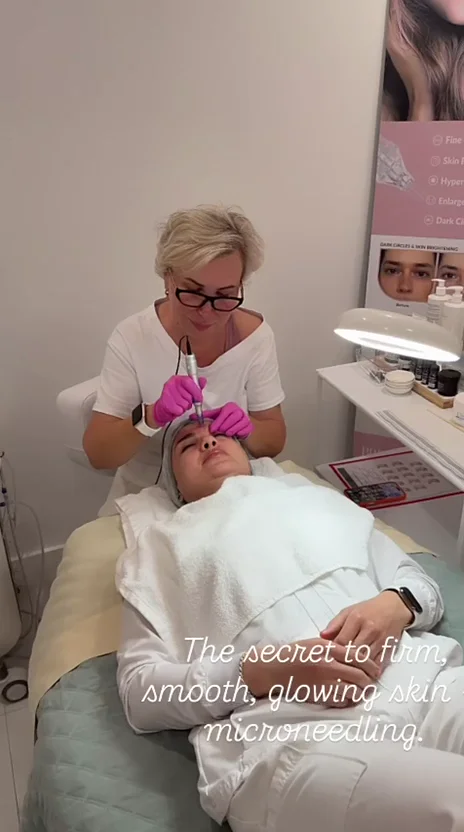
What does microneedling do?
Microneedling, also called collagen induction therapy, creates tiny skin punctures with fine needles. The healing response involves collagen and elastin, proteins supporting skin firmness and smoothness. [1]
At Olena’s Sunny Isles Beach studio, the Microneedling appointment is listed at 60 minutes and $210–$300 per session. Confirm the exact device, proposed treatment, suitability and final price before booking. This article explains the research behind the category; individual studies do not verify this studio’s particular protocol.
Benefits supported by research
A less noticeable appearance of acne scars
A small randomized split-face trial enrolled 20 adults with acne scars; 15 completed follow-up. After three needling sessions, scar appearance improved on the treated side compared with the control side over time. The small sample limits certainty: it supports possible improvement, not complete scar removal or a guaranteed result. [2]
Smoother-looking texture and softer fine lines
A 2018 study of 48 adults reported improved wrinkle and texture scores after four sessions with a specific automated device. It was an open-label, single-center study without an untreated control group. The findings are encouraging, but do not establish identical results for every device, skin type or single appointment. [3]
A useful option, with evidence still developing
A 2025 systematic review included 21 studies and 723 patients treated for facial rejuvenation. Satisfaction was generally high, but treatment schedules varied and aesthetic outcome measures were not standardized. The review therefore supports further research rather than a universal promise of rejuvenation. [4]
Make your goal specific: a particular area of old acne scarring, an uneven-looking surface or fine lines you would like assessed. A useful consultation starts with that priority and compares realistic options. Study schedules are examples of research methods, not instructions for choosing your own session number or treatment interval.
Results take time, and the device matters
The AAD explains that improvements may appear within weeks, while fuller results usually take several months. Some people need a series of treatments. Active skin infection or deep, painful or pus-filled acne should be assessed before proceeding. [5]
Before your visit: suitability and preparation
Discuss medicines, bleeding disorders or blood thinners, cold sores, eczema, psoriasis and a tendency to form raised scars with a healthcare provider before treatment. A skin examination and health-history review help assess suitability. [1]
Bring your current skin care and medication list, including any present or past isotretinoin use. Ask a qualified healthcare professional whether medical clearance is needed and when treatment would be appropriate. Do not stop prescribed medicines on your own. Ask who will perform the procedure and about their relevant training and experience.
Ask which products will be used. FDA-authorized microneedling uses do not include delivering cosmetic serums or medicines into skin. [6]
Recovery and aftercare deserve a clear plan
Redness, bleeding, infection or pigment changes can occur. FDA guidance calls for a new needle cartridge for every person and session, with proper device cleaning. [6]
Leave with written instructions for cleansing, moisturizing, makeup and restarting retinoids or exfoliating acids. Know whom to contact if recovery differs from the expected course. Tell the provider about upcoming travel or important events so your schedule allows for recovery instead of assuming your skin will be ready the next day.
Review progress with photographs taken in similar lighting and a discussion of the original goal. Decide on further visits after considering the response, recovery, proposed benefit and total cost. A thoughtful plan is personal: the published before-and-after images are individual examples, not a forecast of your own result.
Professional sources
These sources address conventional microneedling for facial skin, its evidence and procedural safety. Each is labeled by type; manufacturer information is not independent clinical evidence. They do not endorse the studio or test its specific service. Sources reviewed November 23, 2026.
- Professional guidanceCleveland ClinicHow microneedling works and suitability
- Clinical studyAlam et al. · JAMA Dermatology · 2014Randomized trial for acne scars
- Clinical studyAblon · Journal of Clinical and Aesthetic Dermatology · 2018Device study on wrinkles and texture
- Research reviewFoppiani et al. · Aesthetic Plastic Surgery · 2025Systematic review of facial rejuvenation
- Professional guidanceAmerican Academy of DermatologyGradual results and treatment planning
- Regulatory guidanceU.S. Food and Drug AdministrationAuthorized uses and product combinations
Educational information; not an individual diagnosis or medical treatment plan.