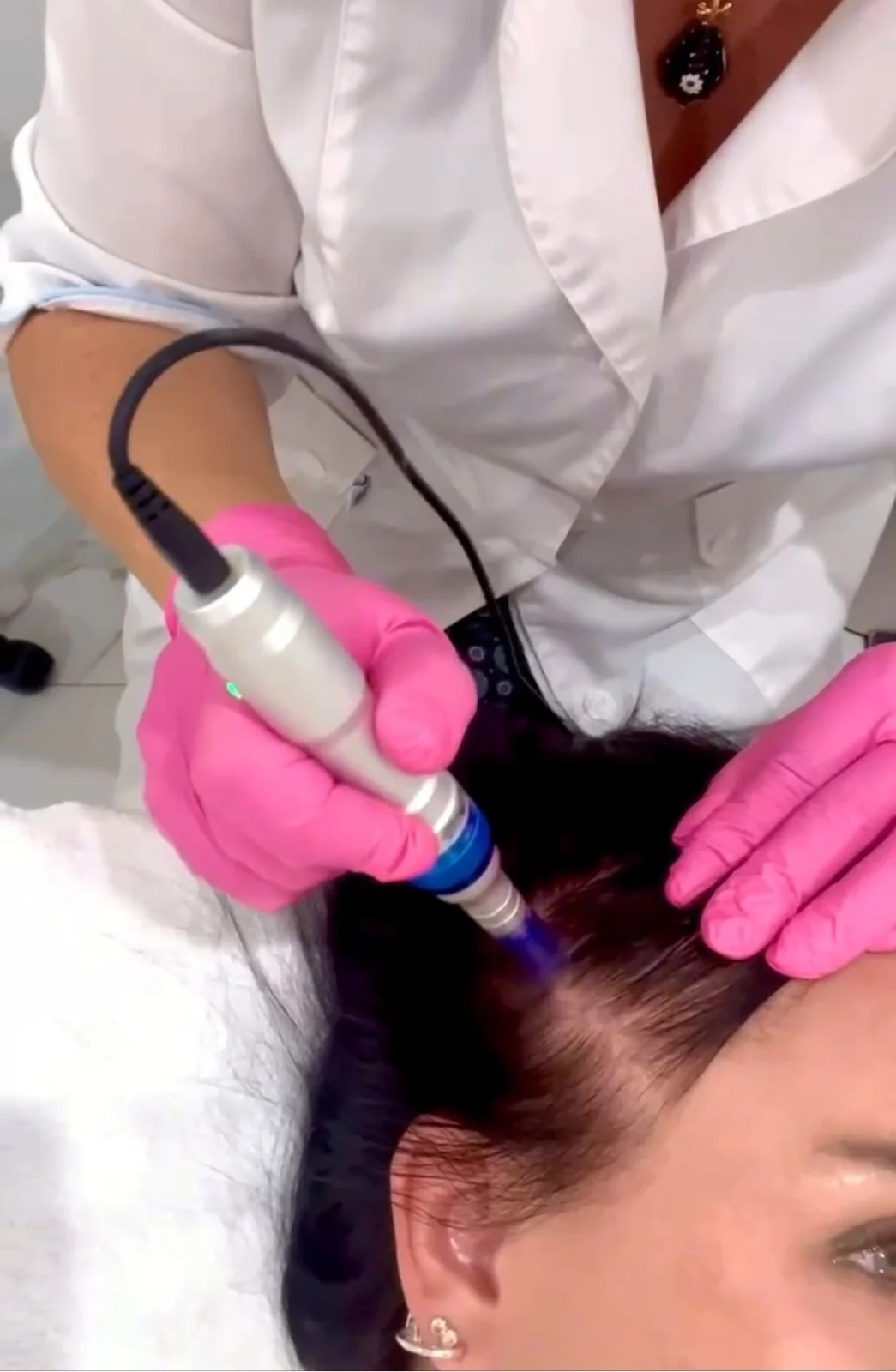
A closer look at scalp microneedling
Scalp microneedling uses fine needles to create small punctures in the skin. [6]
At Olena’s studio in Sunny Isles Beach, Scalp Microneedling is listed as a focused scalp appointment with personalized serum care, lasting 45 minutes at $180 per session. This guide explains the research behind scalp needling and the questions to discuss before booking; the studies do not validate this studio’s particular device, serum or protocol.
A useful starting point is a clear goal. Are you concerned about a widening part, a thinning crown or a change in shedding? Bring those observations to a consultation rather than selecting a procedure from a photograph alone. Understanding what you want to improve makes the discussion more specific and the eventual review more meaningful.
Potential benefits: what the studies found
Additional hair-count improvement in combination treatment
A 2013 randomized pilot trial enrolled 100 men with androgenetic alopecia, a form of hereditary hair loss. Over 12 weeks, microneedling combined with minoxidil improved hair-count and photographic outcomes more than minoxidil alone. Both groups used medication, so this does not prove the same benefit from needling alone or a cosmetic serum. [2]
Encouraging findings for density and hair diameter
A 2024 randomized trial in 36 men also found greater increases in hair density and diameter with microneedling plus minoxidil than with minoxidil alone over 12 weeks. The small male sample and short observation period limit conclusions about lasting results, women or other causes of hair loss. [4]
A measured change may be different from a visible transformation
A separate randomized study published in 2018 enrolled 68 men. Combination treatment increased hair counts more than minoxidil alone after 12 weeks, but the authors described the response as not cosmetically significant. This distinction matters: a statistically better measurement does not guarantee the degree of visible fullness you hope for. [3]
Turn the evidence into realistic expectations
These trials support considering microneedling as a possible addition to a medically guided plan for diagnosed hereditary hair loss. They do not establish that one appointment reverses hair loss, that every serum promotes growth or that a photographed result will be repeated. Ask which evidence applies to the exact treatment being proposed.
The FDA has not cleared microneedling devices for hair loss or for use with another product. Research on combination treatments is therefore different from regulatory clearance. Discuss any proposed serum and its intended use; published minoxidil trials do not establish the safety or effectiveness of an unspecified cosmetic serum. [5]
The studies above assessed change over weeks, rather than at the end of a single visit. Agree in advance on how progress will be recorded and when the plan will be reviewed. The scalp comparison in the treatment gallery is an individual example; ask about timing and accompanying care before treating it as a forecast.
Before booking: diagnosis and suitability
Hair loss has different causes. The AAD recommends identifying the cause with a dermatologist; assessment may involve your history, a scalp examination and sometimes testing. New, sudden or patchy loss deserves evaluation before choosing scalp needling. A studio consultation can discuss the service but does not replace a medical diagnosis. [1]
Before scalp needling, discuss active infection, poor healing, keloid history, immune suppression and medicines with a qualified clinician. [6]
Ask who will perform the procedure, about their relevant training and which device will be used. Clarify what the 45-minute appointment includes, the planned products, possible recovery and total cost if further visits are proposed. A clear explanation should help you make a decision before committing to a course.
Recovery, aftercare and a thoughtful review
Redness, bleeding, infection and pigment changes can occur. Ask about device cleaning and a new needle cartridge for every person and session. [6]
Leave with written instructions covering scalp washing, hair products, exercise and when to resume any prescribed scalp medication. Ask your prescribing clinician about medicine timing, rather than copying a study’s schedule or applying a product to freshly treated skin on your own. Know whom to contact with recovery concerns.
Review photographs with a similar part, angle, lighting and hair condition so the comparison is useful. Discuss comfort and the original goal as well as appearance. Decide on further appointments after considering the response, evidence, recovery and cost; a personal plan should have a reason for each next step.
Professional sources
These sources address scalp-microneedling trials, hair-loss assessment and needling safety. Each is labeled by type; manufacturer information is not independent clinical evidence. They do not endorse the studio or test its specific service. Sources reviewed November 23, 2026.
- Professional guidanceAmerican Academy of DermatologyHair loss: finding the cause and choosing treatment
- Clinical studyDhurat et al. · International Journal of Trichology · 2013Randomized pilot trial: microneedling plus minoxidil
- Clinical studyKumar et al. · Journal of Cutaneous and Aesthetic Surgery · 2018Hair counts and visible results in a controlled trial
- Clinical studyAdistri et al. · Dermatology Reports · 2024Randomized trial of combination therapy in 36 men
- Regulatory guidanceU.S. Food and Drug AdministrationHair-loss use and combinations with other products
- Regulatory guidanceU.S. Food and Drug AdministrationMicroneedling risks, device hygiene and cartridges
Educational information; not an individual diagnosis or medical treatment plan.